EV and solar · 11 September 2026
What it costs to install an EV charger at home on the Gold Coast
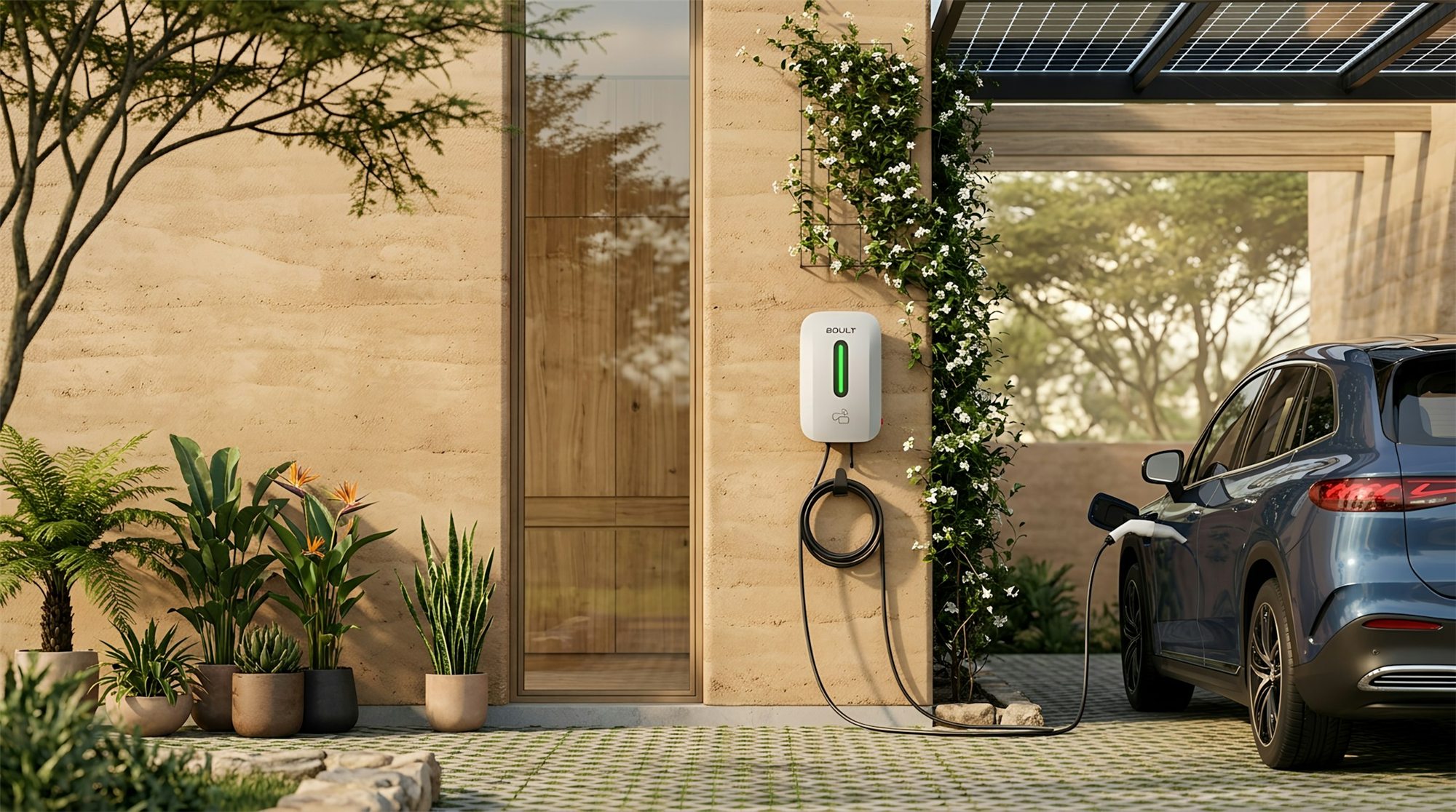
Most Gold Coast homes can have a 7 kW wall charger supplied and installed from $1,290. Here is what that includes, what pushes the price up and how to tell whether your switchboard is ready.
On this page
Thinking about a home charger?
Send us a photo of your switchboard and where you park. We will price the charger and installation in writing. From $1,290.
EV charger installationKey takeaways
An electric car can charge from an ordinary power point, but slowly. A dedicated wall charger is faster, safer for daily use and lets you make the most of cheaper overnight rates or your own solar. The question most people ask us is what it will cost, and the honest answer is that it depends on your home more than on the charger.
This guide breaks down the options, what a standard installation includes and the things that add to the price.
Your home charging options
There are three ways to charge at home. The speeds below are typical. Your car's onboard charger sets the real limit, so a 22 kW charger will not charge a car that only accepts 7 kW any faster.
Option
Typical speed
Best for
Portable cable in a power point
Around 10 to 15 km of range per hour
Occasional top-ups, short daily drives and plug-in hybrids.
7 kW single-phase wall charger
Around 40 to 50 km of range per hour
Most homes. Charges a typical EV from low to full overnight.
11 to 22 kW three-phase charger
Around 60 to 120 km per hour, if the car accepts it
Homes with three-phase supply, two EVs or long daily distances.
Range per hour varies with the car, the weather and how the charger is set up.
What a standard installation includes
Our supply and install price covers a quality 7 kW wall charger and a standard installation. Standard means the charger is mounted in a garage or carport close to the switchboard, with the cable run through an accessible roof space or along a wall.
What changes the price
Distance from the switchboard
The longer the cable run, the more cable and labour. A charger on the far side of a double garage costs more than one on the same wall as the board. Slab floors, rendered brick and finished ceilings with no roof access add time.
Switchboard capacity
If your board has no space or no safety switches, or the supply is already near its limit, it may need work first. We quote both together so there are no surprises. Read five signs your switchboard needs upgrading to see where yours stands.
Single-phase or three-phase
Most Gold Coast homes are single-phase, which suits a 7 kW charger well. Faster chargers need three-phase power. If you do not have it, an upgrade involves Energex and starts from $3,500, so it only makes sense if you need the speed.
Solar and smart features
Many chargers can follow your solar and charge from excess generation, which may need an energy monitor at the switchboard. Load management, which slows charging when the house is busy, can sometimes avoid a supply upgrade altogether.
What it costs on the Gold Coast
These are our starting prices. Every job is priced in writing after we see photos of your switchboard and parking area, or after a short site visit.
EV charger supply and install
7 kW wall charger, standard cable run
from
$1,290
EV charger install only
You supply the charger, standard cable run
from
$690
Switchboard upgrade
Single-phase, up to 8 circuits with RCDs
from
$1,490
Three-phase upgrade
For EV chargers, ducted air and workshops
from
$3,500
Prices include GST. Charger prices assume your switchboard has spare capacity. If it needs an upgrade first, we quote both together.
Running costs depend on your electricity plan. Charging overnight on an off-peak or EV tariff, or during the day from your own solar, usually costs far less than fuel for the same distance. Ask your retailer which tariffs suit EV charging.
Need a hand?
When to call a licensed electrician
Talk to a licensed electrician before you buy a charger if your switchboard has ceramic fuses or no safety switches, if you want a three-phase charger, or if the parking spot is a long way from the board. In Queensland a fixed wall charger must be installed by a licensed electrician. Never charge a car from an extension lead or power board, which can overheat over hours of charging.
EV charger FAQ
Can I charge my EV from a normal power point?
Yes, with the portable cable supplied with most cars, plugged into a power point in good condition. It is slow, and a dedicated circuit is safer for daily charging. Never use an extension lead or power board.
How long does installation take?
A standard installation is usually finished in half a day. Jobs that need a switchboard upgrade or a long cable run can take a full day.
Do I need approval from Energex?
We check your connection when we quote. Three-phase upgrades and some larger chargers involve Energex, and we arrange that for you as part of the job.
Can my charger run on solar?
Many smart chargers can charge from excess solar. It usually needs an energy monitor fitted at the switchboard. Tell us your solar and inverter details when you ask for a quote.
Should I get a 22 kW charger?
Only if you have three-phase supply and a car that accepts 22 kW on AC. Most EVs charge at 7 to 11 kW at home, so a 7 kW charger suits most households.
Related services
Get your home ready to charge
Keep reading
More guides on EV and solar
Get in touch
Ready to charge at home?
Send us a photo of your switchboard and where you park, and we will come back with a fixed price for your charger, usually within the hour.